A flat roof extension can be a smart way to add more space to your home without changing the look of the property too much. Whether you want a larger kitchen, a dining area, a home office or a more open family room, a flat roof can work well on many single-storey extensions.
Flat roofs are often used on rear extensions, side returns, garage conversions and modern home additions. They can look clean and simple, they can be easier to build in some situations and they can allow for rooflights that bring natural light into the room below.
That said, a flat roof extension still needs careful planning. The roof has to be strong, properly insulated and correctly finished so it can cope with the weather. It also needs the right fall, drainage and materials to help prevent standing water and future leaks.
At North East Contractors Ltd, we help homeowners across Whitley Bay and the surrounding areas plan and build practical, long-lasting home extensions. In this guide, we explain the pros, cons, costs and best materials for flat roof extensions so you can make a more informed decision before starting your project.
What is a flat roof extension?
A flat roof extension is an extension with a roof that looks almost level from the outside. Despite the name, a flat roof is not completely flat. It should have a slight slope, known as a fall, so rainwater can run towards the correct drainage point.
Flat roofs are commonly used on single-storey extensions because they can be more straightforward than pitched roofs in certain situations. They are often chosen for kitchen extensions, utility rooms, garden rooms attached to the house and side return extensions on older homes.
A flat roof can also suit a modern design. It gives a clean finish and can work well with large doors, rooflights and open-plan layouts. For many homes, especially where a pitched roof would be too bulky or difficult to fit, a flat roof can be the most practical option.
Why choose a flat roof for an extension?
One of the main reasons homeowners choose a flat roof extension is flexibility. A flat roof can often fit neatly against the existing property, particularly where there are upstairs windows, boundary walls or awkward rooflines to consider.
Flat roofs can also help keep the overall height of the extension down. This may be useful if you want to avoid blocking light to upstairs rooms or neighbouring properties. A lower roofline can also help the extension look more balanced, especially at the rear of the home.
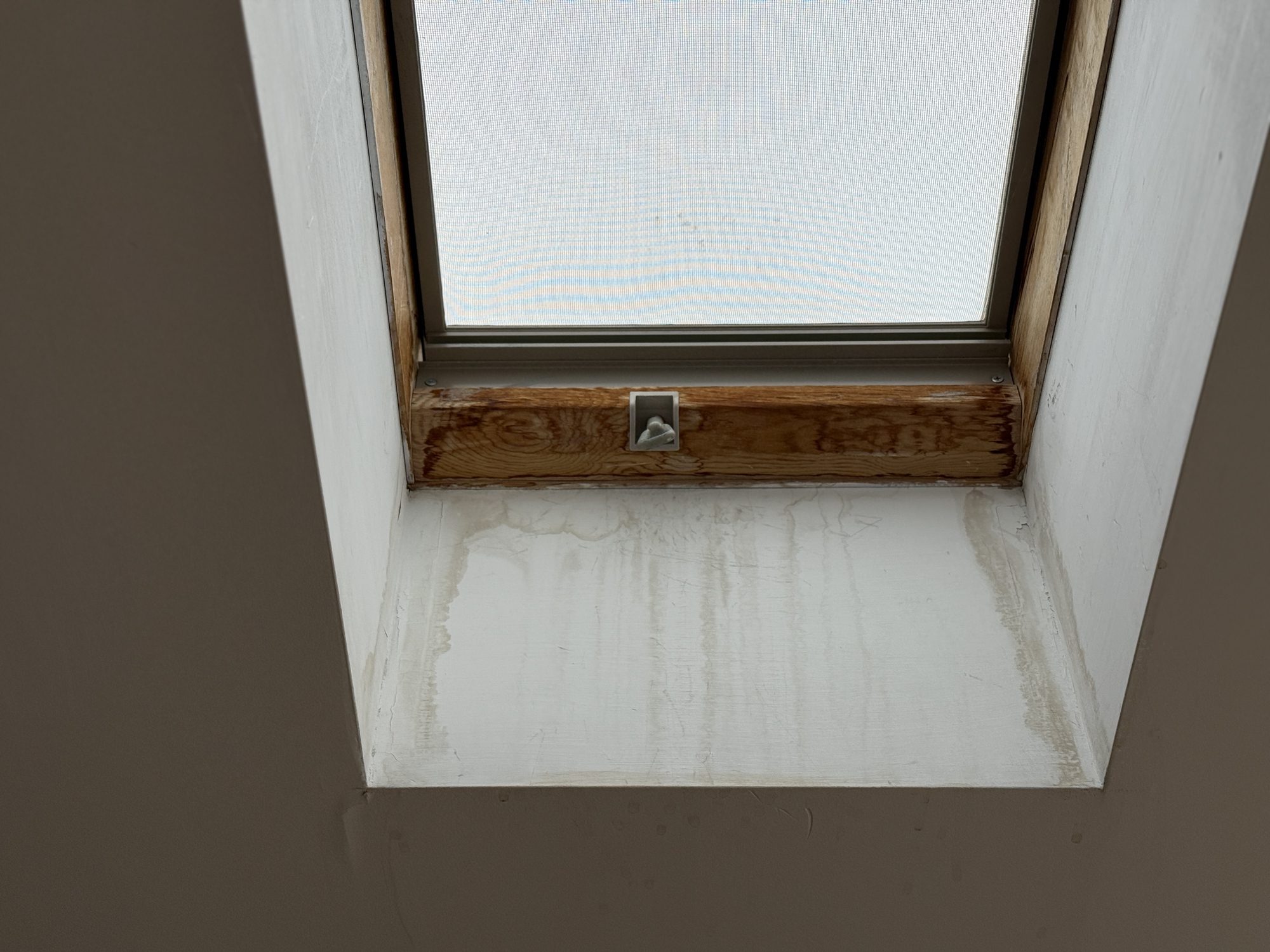
Another benefit is that flat roofs are well suited to rooflights. Adding rooflights can make a big difference to the finished space. They can bring daylight into the middle of a room, which is useful for deep kitchen extensions where natural light from the rear doors may not reach far enough.
Flat roof extensions can also offer a neat, modern appearance. If you want a simple finish without the stronger visual impact of a pitched roof, a flat roof may be the right choice.
The main benefits of flat roof extensions
A flat roof extension can offer several practical benefits when it is designed and built correctly.
The first is cost control. A flat roof is not always the cheapest option in every case, but it can be more cost-effective than a pitched roof for some extensions. The structure can be simpler, the roofline can be less complex and the build may require fewer materials than a tiled pitched roof.
The second benefit is design freedom. A flat roof can work well with sliding doors, bifold doors, lanterns and rooflights. This can help create a bright, open room that feels connected to the garden.
The third benefit is space. Because flat roofs can keep the roof height lower, they can be useful where space is tight. This is often the case with side return extensions, terraced homes or properties with neighbouring boundaries close by.
A flat roof can also make maintenance access more straightforward, although safety must always come first. If repairs or inspections are needed in the future, a flat roof may be easier for a professional to assess than a complicated pitched roof.
For homeowners planning home extensions, these benefits can make a flat roof a strong option, especially when the aim is to add practical living space with a clean and simple finish.
The possible drawbacks to consider
Flat roof extensions are popular, but they are not right for every home. Before deciding, it is important to understand the possible drawbacks.
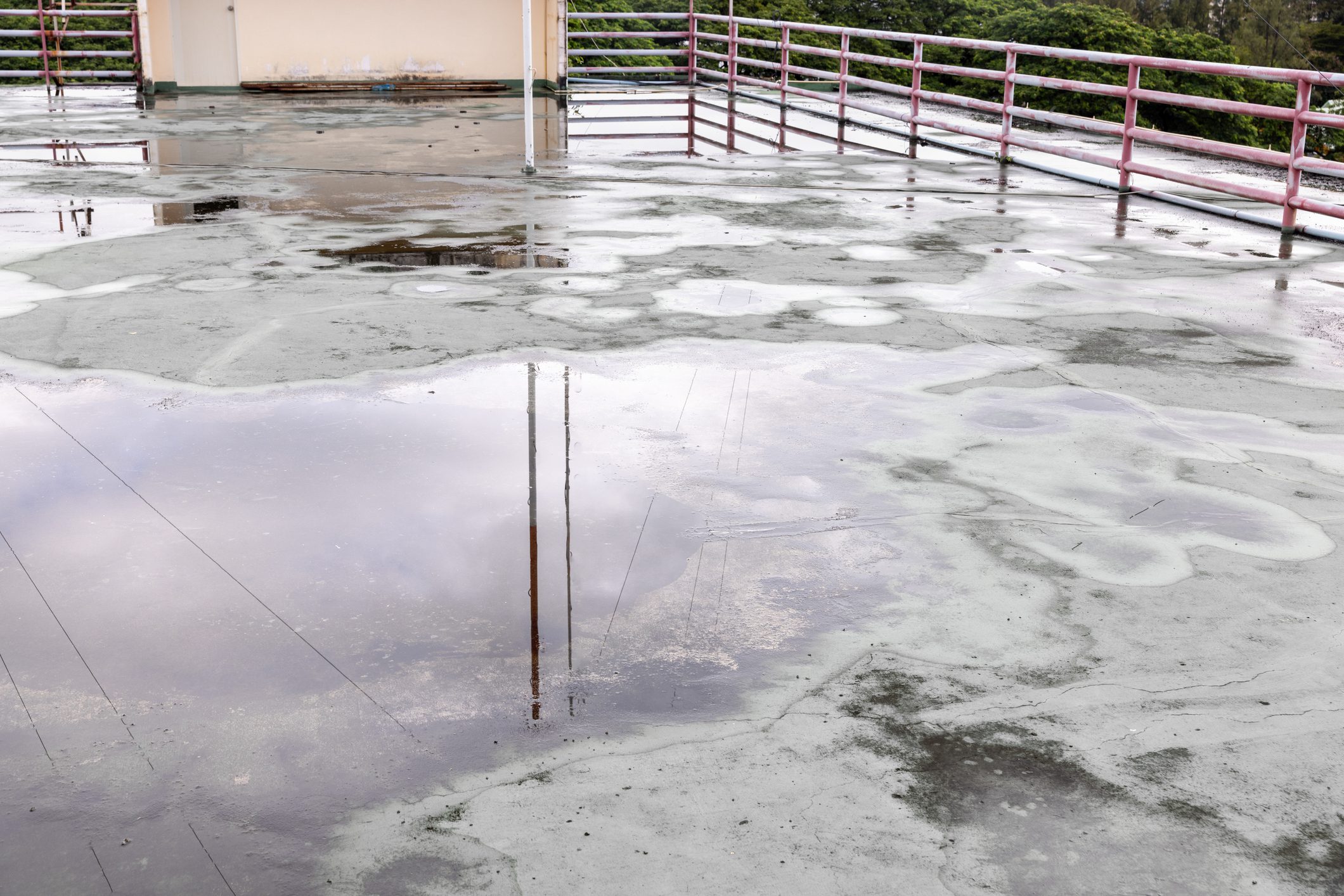
The first thing to consider is drainage. A flat roof needs to be designed with the correct fall so water does not sit on the surface for long periods. Poor drainage can lead to ponding, staining and extra strain on the roof covering.
The second issue is workmanship. Flat roofs rely heavily on good installation. Even a high-quality roof covering can fail if the joints, edges, outlets and upstands are not fitted correctly. This is why choosing experienced contractors is so important.
The third point is lifespan. Some flat roof materials last longer than others. A lower-cost material may suit some budgets, but it may not offer the same lifespan or finish as a higher-grade system. It is worth thinking about the long-term cost, not just the initial quote.
A flat roof can also look too plain if it is not designed properly. The edges, fascia, rooflights and connection to the existing house all affect the finished appearance. A good design should look like it belongs with the property, not like an afterthought.
How much does a flat roof extension cost?
The cost of a flat roof extension depends on far more than the roof covering alone. The size of the extension, ground conditions, structure, insulation, drainage, glazing, electrics, plumbing and internal finish will all affect the final price.
For the roof itself, the cost can vary depending on the material used, the amount of insulation required, the number of rooflights, the shape of the roof and how easy the area is to access. A simple rectangular flat roof will usually be more straightforward than a roof with several corners, outlets or changes in level.
The type of extension also matters. A small utility extension will normally cost less than a large open-plan kitchen extension with steelwork, large doors and multiple rooflights. If walls need to be removed inside the existing home, structural design and building control checks may also be needed.
It is always better to get a proper quote based on your property rather than relying on a general online figure. Online price guides can be useful for early planning, but they rarely account for the details of your home, the access, the finish you want and the condition of the existing building.
When comparing quotes, make sure you understand what is included. Look at the roof structure, insulation, roof covering, drainage, trims, rooflights, making good and waste removal. A cheaper quote may not always include the same level of work.
Best materials for a flat roof extension
There are several materials commonly used for flat roof extensions. The right choice depends on your budget, the look you want, how the roof will be used and the level of durability you need.
EPDM rubber roofing
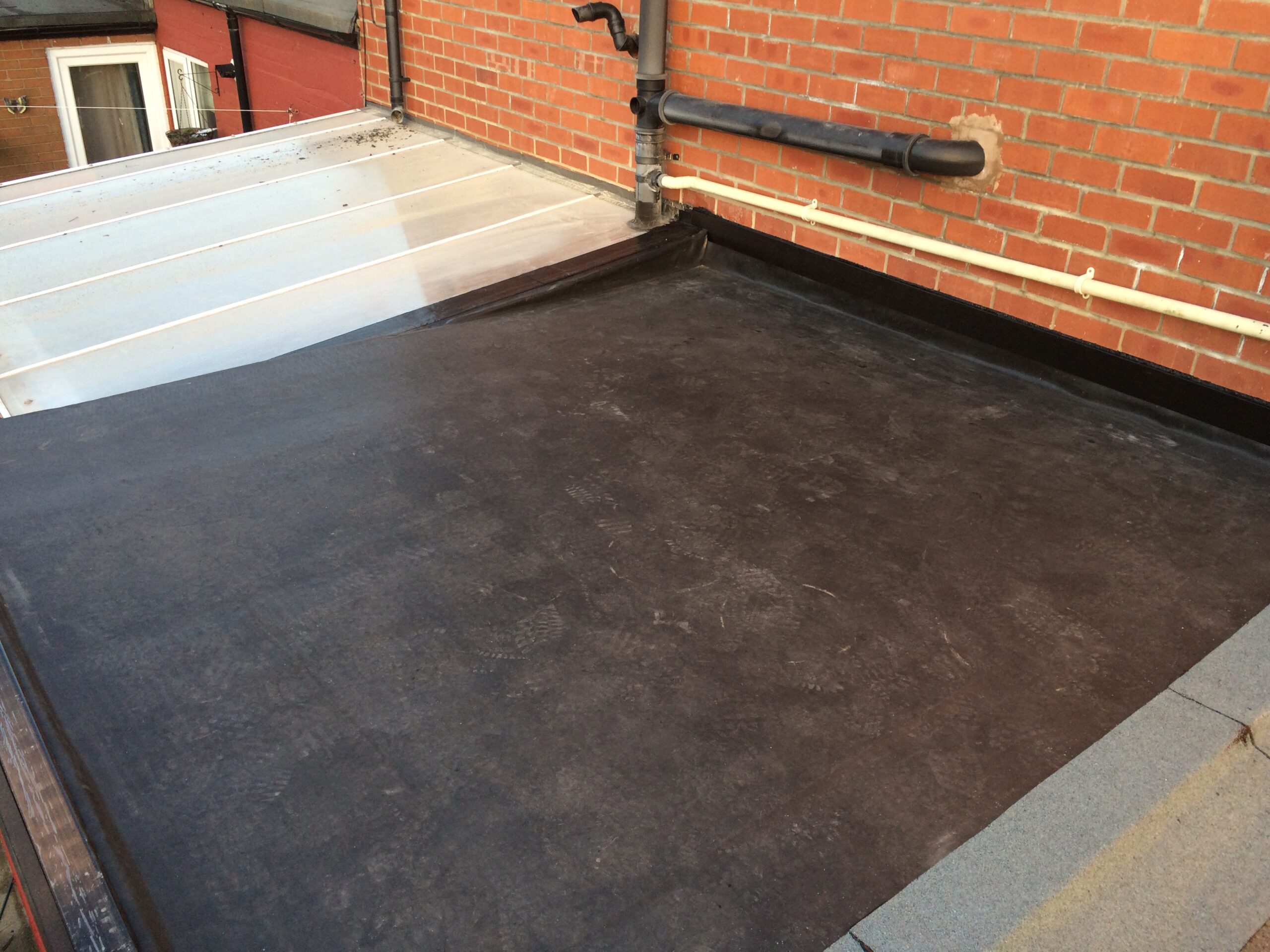
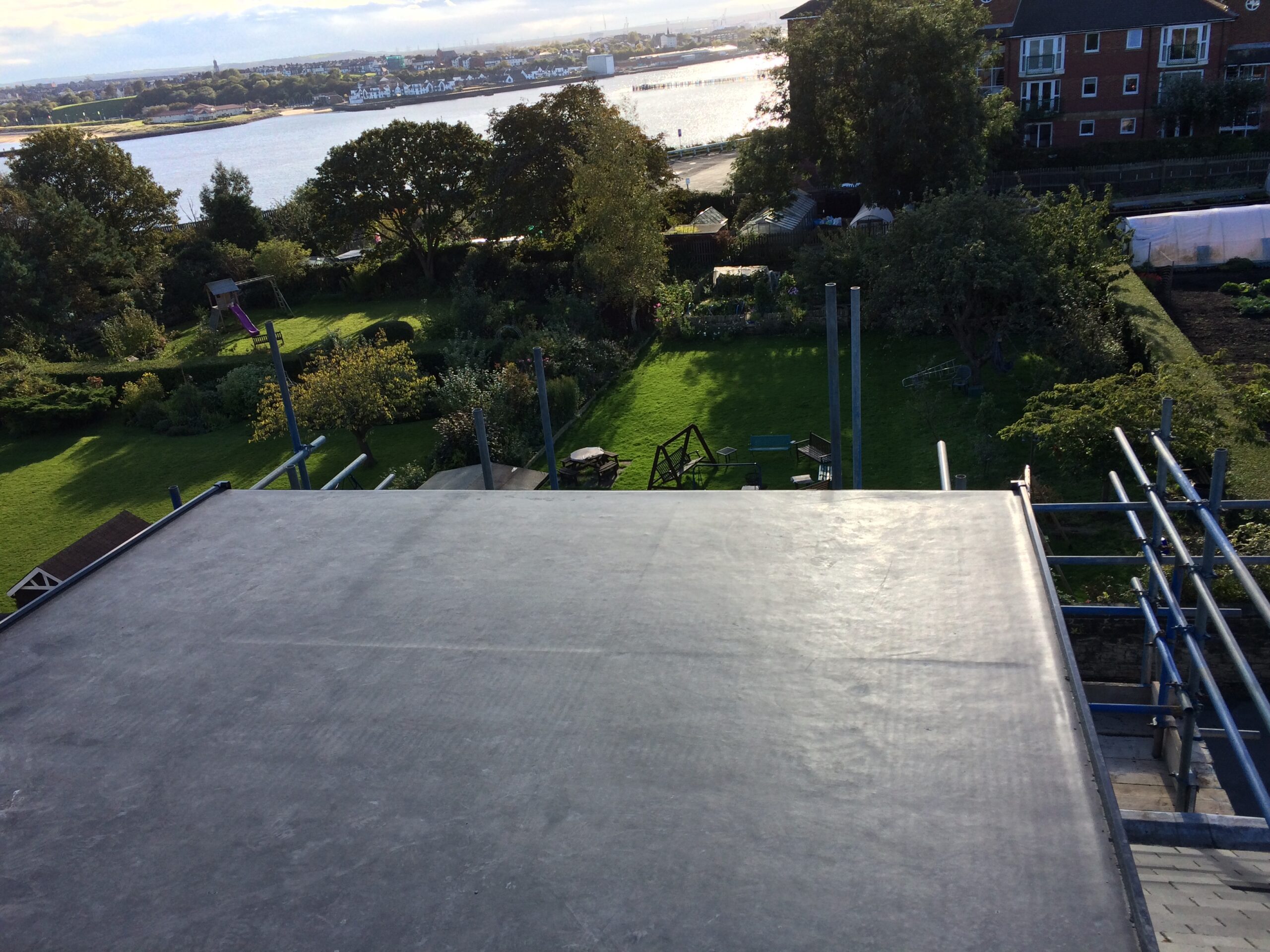
EPDM is a rubber roofing membrane that is commonly used on flat roofs. It is flexible, lightweight and well suited to many domestic extensions.
One of the main benefits of EPDM is that it can be installed in large sheets, which can reduce the number of joins on the roof. Fewer joins can mean fewer weak points, provided the system is fitted correctly.
EPDM is often a good choice for homeowners who want a practical, long-lasting flat roof material with a simple finish. It is especially useful for straightforward roof shapes.
GRP fibreglass roofing
GRP, often called fibreglass roofing, creates a hard, seamless finish when installed properly. It can look neat and modern, which makes it popular for extensions where appearance is important.
GRP can be a good option for roofs with details such as trims, outlets and edges, but it needs careful installation. The weather conditions during fitting matter because the resin system has to cure correctly.
A well-installed GRP roof can provide a clean finish, but it should be installed by people who understand the system and the preparation involved.
Felt roofing
Modern felt roofing is much better than many older felt systems. It is still used on flat roofs and can be a cost-effective choice for some extensions.
Felt is often chosen when budget is a key factor. It can work well when installed as a proper multi-layer system, but it may not offer the same appeal or lifespan as some other materials.
For some homeowners, felt can be a practical option. For others, EPDM or GRP may be more suitable depending on the extension design and long-term plans for the property.
Liquid roofing systems
Liquid roofing systems are applied as a coating that cures to form a waterproof layer. They can be useful on roofs with awkward shapes, details or areas that are difficult to cover with sheet materials.
These systems can be effective, but preparation is very important. The surface needs to be suitable and the product must be applied correctly. As with any flat roof material, the quality of installation has a major impact on performance.
Warm roof or cold roof?
When planning a flat roof extension, insulation is one of the most important details. Many modern flat roof extensions use a warm roof design. This usually means the insulation sits above the roof deck, helping to keep the structure warmer and reduce the risk of condensation.
A cold roof places insulation between the joists, with ventilation above. This type of roof can be more difficult to get right on some domestic extensions because ventilation and condensation control need careful attention.
The right design depends on the property and the project, but insulation should never be treated as an afterthought. A poorly insulated flat roof can make the new room uncomfortable, increase heat loss and lead to moisture problems.
A good extension should feel comfortable throughout the year. That means thinking about insulation, ventilation and rooflights at the planning stage, not once the structure has already been built.
Do flat roof extensions need planning permission?
Some flat roof extensions may fall under permitted development rights, while others need planning permission. The answer depends on the size, height, position and design of the extension, as well as the type of property and any previous work carried out.
Planning rules can also be stricter in conservation areas or for listed buildings. Flats and maisonettes usually have different restrictions from houses.
Even where planning permission is not needed, building regulations approval will usually still be required. This covers important areas such as structure, insulation, drainage, fire safety and energy performance.
It is always worth checking before work starts. Getting the right advice early can help avoid delays, redesigns and problems when you later sell the property.

Common flat roof extension mistakes
One common mistake is choosing the roof material based on price alone. The cheapest option may not be the best value if it has a shorter lifespan or is not suited to the roof design.
Another mistake is overlooking drainage. A flat roof should be designed so water flows to the right outlet. If water sits on the roof, it can shorten the life of the covering and lead to future problems.
Poor detailing is another issue. The edges of the roof, wall junctions, trims, outlets and rooflight upstands are all important. Many flat roof leaks occur around details rather than in the middle of the roof covering.
Homeowners can also underestimate the importance of insulation. The roof is a major part of the new room, so it needs to be built to the right standard. Good insulation helps keep the space warm in winter and more comfortable in summer.
Finally, it is important to think about how the extension will look from inside and outside. A flat roof extension should not only keep the weather out. It should also suit the house, make good use of light and create a room that works for everyday life.
Is a flat roof extension right for your home?
A flat roof extension can be an excellent choice if you want a practical, modern and space-efficient addition to your home. It can work particularly well for single-storey rear extensions, side returns, kitchen extensions and garden-facing living spaces.
It may be the right option if you want to keep the roofline low, add rooflights or create a clean modern look. It can also be a good choice where a pitched roof would be too tall, too complex or less suitable for the shape of the property.
However, a flat roof needs to be designed and built properly. The roof material, insulation, drainage and detailing all matter. A good result depends on careful planning and skilled workmanship.
If you are considering flat roofing for a new extension, it is worth speaking to a team that understands both the roof and the wider build. This helps ensure the extension works as a complete space, not just as separate parts.
Speak to North East Contractors
A flat roof extension can add useful space and value to your home when it is planned properly. Whether you are thinking about a new kitchen extension, a larger living area or a practical utility space, choosing the right roof design is a key part of the project.
At North East Contractors, we build extensions and flat roofs for homeowners in Whitley Bay and across the surrounding North East area. We focus on practical advice, reliable workmanship and a finished result that suits your home.
If you are planning a flat roof extension and would like to talk through your options, get in touch with our team today.