The key difference is source and timing. A roof leak is water from outside that gets in through a defect, and it usually worsens with rain or wind. Roof condensation is indoor moisture turning to water on cold roof surfaces, often worst on cold mornings and during winter, even when it has not rained. Getting the diagnosis right saves time, protects your home and avoids wasted spend.
The short answer and why it matters
A leak is external water ingress. Condensation is internal moisture hitting a cold surface and turning into droplets. Leaks track the weather, especially rain and wind direction. Condensation tracks temperature, humidity and ventilation. One demands fabric repair. The other requires moisture control and airflow. Sometimes both are present, so careful observation is essential before you spend on a fix that does not solve the real problem.
Quick difference at a glance:
- Rain linked: leaks worsen in or after rain, condensation often appears in dry, cold weather
- Pattern: leaks create tide marks and localised trails, condensation looks misty or widespread with droplets
- Location: leaks sit under a defect, condensation coats cold surfaces like felt and nails
- Smell: leaks smell earthy or woody, condensation is associated with mustiness and black mould
- Response: leaks need roof fabric repair, condensation needs humidity reduction and ventilation
What a roof leak is
A roof leak occurs when the outer weatherproof layer fails and rainwater or meltwater finds a way inside. Water follows gravity, but in roofs it also travels along surfaces by capillary action. That is why a leak can show up several rafters away from the visible defect.
Common pathways include slipped or cracked tiles, deteriorated mortar on ridge tiles, failed lead or flexible flashings around chimneys and roof windows, perished seals on vent pipes, split underlay, gaps at valley troughs and poorly sealed junctions at abutments. On flat roofs, pinholes in felt, open laps, blistering, failed joints at upstands and outlets, and ponding all contribute to leaks.
The signature of a leak is consistency with rainfall. Drips, damp rings that expand after showers, or ceilings that darken and then slowly dry as weather improves are typical. The wetter the storm, the worse the symptom. If wind drives rain from a set direction, stains may only appear during easterlies or northerlies that force water under overlapping elements.
What roof condensation is
Roof condensation is moisture generated inside the building that finds its way into the roof space and condenses on cold materials. Warm air holds vapour. When that warm, humid air meets a cold surface, such as the underside of sarking felt, a breathable membrane, rafters, or nail heads, it cools. If it cools past the dew point, vapour turns into water droplets.
In British homes, the main sources are cooking, showering, drying clothes, unvented tumble dryers, people breathing, uncovered water tanks and even aquariums. Moist air rises and can escape into the loft or voids through gaps around loft hatches, recessed lights, pipe penetrations and poorly sealed plasterboard joints. If the roof space lacks adequate cross-ventilation, or if insulation brings surfaces below the dew point, condensation can occur in large volumes. Droplets on the underside of felt or membrane, black mould on timbers and wet or compressed insulation are frequent signs.
Condensation rarely cares if it rains. It cares about temperature gradients, humidity and airflow. That is why issues peak in winter, first thing in the morning, and in rooms used for bathing and cooking.
Indoor signs and timing patterns
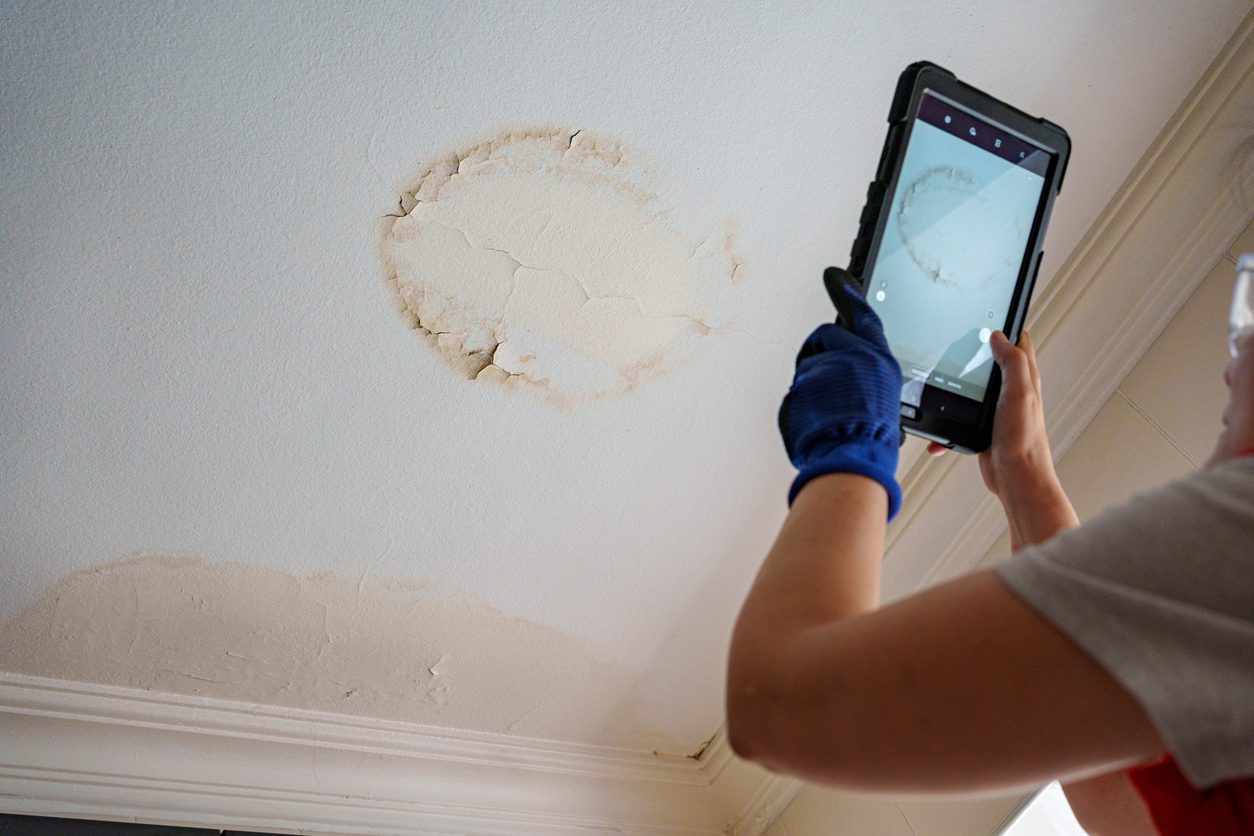
Indoors, leaks and condensation leave different fingerprints. A leak often produces a well-defined brownish ring on ceilings and walls. This tea stain has a darker edge where water dries and leaves behind dissolved material from the roof fabric. If the defect persists, the patch slowly grows in response to storms. You might see a track or trail, a clear path where water has followed a joist or plasterboard seam. When you press the area, the paint film can crack or flake. In bad cases, water drips steadily, and the plaster sags.
Condensation presents as a broader haze of damp that does not have a sharp edge. Black mould spots, especially on external corners, around window reveals and on the cold edge of ceilings near the eaves, are typical. The mould is not water itself, it is a living organism thriving on surface moisture and dust. You may notice wet windows in the morning, a musty smell and clothes taking longer to dry indoors. In bedrooms, the worst areas are often behind wardrobes on outside walls and at ceiling perimeters, which hints at general humidity rather than a point leak.
Timing is a powerful clue. After a day of steady rain with wind, a leak worsens. On a crisp, dry winter morning, condensation tends to be at its peak. If damp patches stay similar through wet and dry spells yet vary with indoor activity, suspect condensation. If damp patches appear only after rain and slowly fade in dry weather, look for a leak.
Clues in the loft or roof space
The loft is the best place to separate the two issues. Use safe access, stand only on boarded areas or joists, and work with a torch. Look closely at what is wet and how.
Condensation leaves beads of water hanging from the underside of felt or breathable membrane. Nail heads or screws look like they are sweating, a phenomenon often nicknamed nail rot even though the metal is sound. Timbers can appear clammy rather than actively dripping. The wetness is often spread across a wide area with no obvious source above. Insulation may be damp across large patches, especially at the eaves where cold air meets warm air. You might also see mould on the colder faces of rafters.
Leaks leave trails. Start by checking above the damp ceiling area. Feel along rafters and battens to find damp pathways. Trace them upward to a valley, a vent pipe, a roof window, a chimney, or a nail hole beneath a cracked tile. Where water has repeatedly dripped, you will sometimes find a clean track on dusty timber or a mineral deposit where water has evaporated, similar to limescale. The underlay may be torn, and you can see a water mark running from the tear. Wetness that lines up under a specific feature is a strong pointer to a leak.
Insulation tells a story too. Widespread flattened, soggy quilt often points to condensation. A single sodden clump beneath a defect points to a leak. Lift insulation with care and look for a small pool on the plasterboard. If a puddle sits under a single drip point, search directly above for a route.
Smell matters. Prolonged condensation creates a musty, slightly sour smell from mould growth. Prolonged leaks smell woody or earthy as timber takes on water. Neither is healthy, but they help you separate causes.
Clues visible from outside
Without climbing onto the roof, you can learn a lot from the ground. Binoculars help. Focus first on parts of the roof near your problem area.
On pitched roofs, look for slipped, cracked or missing tiles. A slipped tile often reveals a slightly different colour where it once sat. Check ridge and hip tiles for missing mortar or movement. Look at valleys for debris and at abutments where the roof meets a wall for loose or cracked lead flashing. Pay attention to roof windows and sun tunnels, where perished gaskets or failed sealants can admit water. Vent tiles and soil vent pipes can leak once seals fatigue. If you later need repair or renewal, our pitched roof service in Whitley Bay explains typical options.
On flat roofs, look at the surface from a window above or neighbouring property. Blistering, crazed surfaces, open laps and standing water longer than two days are warning signs. The edges, known as upstands, are critical. Gaps where the membrane meets a wall or parapet can let water straight into the structure. Outlets and gutters must be clear. If a downpipe is blocked, water can back up under the edge detail and soak the decking. For materials and renewal choices, see our EPDM flat rubber roofs page.
Gutters and rainwater goods matter for both problems. Overflowing gutters soak the eaves and can force water back into the roof, causing apparent leaks. They also keep exterior walls wet, which lowers internal surface temperature and promotes condensation inside. Moss build up on tiles holds moisture and can drive water sideways under laps in wind. Trimming back overhanging branches reduces leaf fall and shade that keep roofs damp.
Differences by roof type
Pitched tile or slate roofs and flat roofs fail, behave and ventilate differently. That changes how you spot and fix problems.
Pitched roofs rely on overlapping units and gravity. Water is kept out by the tiles, the felt or membrane beneath and the detailing at junctions. Older roofs use bitumen felt, which is not vapour open. Newer roofs often use breathable membranes with specific ventilation strategies. In a traditional cold loft with insulation at ceiling level, air should move freely from soffit vents at the eaves to ridge or high-level vents. If insulation blocks eaves vents or there is no high-level venting, condensation can build rapidly in winter. Where the underlay has failed or tiles are cracked, not just condensation but direct ingress will occur, which you trace to the exact detail above.
Flat roofs manage water by forming a continuous waterproof layer and encouraging runoff towards outlets. Because a flat roof surface can be cold, vapour control becomes critical. In a warm flat roof, insulation sits above the deck and below the waterproof layer, with a vapour control layer on the warm side of the deck. Done well, the deck stays warm and condensation risk is low. In a cold flat roof, insulation sits between joists with ventilation voids above, similar to a loft. If the void is not ventilated well or the vapour control layer is missing, condensation can soak the deck from the inside. In practice, many older cold flat roofs suffer winter condensation that looks like a leak. If wet patches are worst after frosty, dry nights and less linked to rain, suspect internal condensation within the build up.
Metal roofs and sheeted industrial roofs introduce different physics. They are particularly prone to condensation on the underside of sheets unless anti-condensation fleece, vapour control and ventilation are designed correctly. Drips from cold metal often confuse homeowners into chasing phantom leaks.
Weather and regional factors in the North East
Coastal North East homes face salt-laden, wind driven rain from the North Sea. Wind gets under laps at ridges and tiles where mortar has weakened. Valley flashings and abutments see high volumes of water in storms. Winter brings repeated freeze and thaw that opens small cracks in mortar and felt, then wind pushes rain in through those gaps. Leaks show up quickly after such weather.
At the same time, North East winters are cold and damp. Houses closed up against the cold trap moisture. Shower steam, cooking vapour and clothes drying indoors add litres of water to the air daily. A cold night followed by a bright morning is the classic condensation trigger. Expect to see droplets on the underside of membranes, wet nails and black mould on colder timbers. Homes near the coast also see faster corrosion of fixings, which does not cause condensation but can be a by-product of moist, salty air.
Understanding how local weather drives each problem helps you choose the right fix. If a mark grew after last week’s gale and sideways rain, chase a leak. If it peaked after a string of frosty, dry mornings, prioritise condensation control.
When both problems occur together
It is entirely possible to have a small leak and a condensation problem at the same time. A minor leak keeps timbers damp, and damp wood absorbs heat poorly so it stays colder. Cold, damp surfaces then attract more condensation, and mould flourishes. Conversely, heavy condensation soaks plasterboard and insulation, so any slight leak that would otherwise have dried out now lingers and leaves a stain.
The fix in mixed cases is staged. First, reduce humidity and improve ventilation to stop the daily supply of water vapour. This helps the structure dry. Next, repair the specific defect that admits rain. Finally, check insulation and air sealing so the same cycle does not resume the next winter.
Risks to health and building fabric
Damp conditions create a home for black mould and dust mites. Mould releases spores that aggravate asthma and allergies. Vulnerable people, such as children, older adults and those with respiratory conditions, feel these effects sooner. Even if you cannot see mould, a musty smell signals growth somewhere.
Timber wetness causes decay. Prolonged high moisture content supports wet rot, which softens and weakens wood. Dry rot requires particular conditions and is less common in well ventilated roofs, but ignoring leaks or heavy condensation can make those conditions more likely. Metal fixings corrode faster in damp, salty air, especially near the coast, which weakens structural connections over time.
Wet insulation stops working properly. The thermal resistance drops, so rooms feel colder and heating bills rise. Condensation on electrical fittings carries risk, particularly for recessed lights that open a path from room air into the loft. Plaster and paint bubble, flake or stain, which requires redecoration and sometimes replastering. Preventing moisture is far cheaper than repairing damage after a season or two.
Insurance position in brief
Policies vary, but many UK home insurance policies cover sudden, unforeseen damage such as storm damage that causes a roof leak. They often do not cover gradual issues like condensation or wear and tear. The difference hinges on the cause and whether you maintained the property.
Keep a record. Note dates and weather when you see damp. Take clear photos of stains when they appear, and again after rain or after a cold, dry morning. Keep receipts for gutter cleaning and roof maintenance. If a roofer repairs storm damage, ask for a brief note or invoice that states the cause. This evidence helps insurers understand what happened and why. The goal is not to game a claim, it is to document reality so you are treated fairly.
Safe checks a homeowner can carry out today
A few simple observations can save you guesswork and support a clear diagnosis. Stay safe. Do not climb on the roof. Do not step on unboarded loft insulation. Use proper PPE if mould is present.
Five evidence checks you can do safely:
- Compare symptoms after heavy rain and after a frosty, dry morning, then note which is worse
- Inspect the loft with a torch for beads on felt, wet nails, trails on timber and localised drips
- Look from the ground for slipped tiles, damaged flashings, blocked gutters and flat roof ponding
- Check humidity sources indoors, such as steamy bathrooms, indoor clothes drying and unvented appliances
- Photograph stains and mark their edge with a pencil line to see if they grow with rain or vary with temperature
These small steps create a timeline and a body of evidence. If you later involve a roofer, this information shortens the diagnostic process and avoids unnecessary works.
Reducing humidity and improving ventilation
Condensation prevention has two tasks: lower the amount of water vapour produced, and give that vapour a controlled route out of the building before it meets a cold surface.
Start with sources. Use cooker hoods that vent outside while you cook. Keep saucepan lids on. Use the bathroom extractor during showers and for at least 15 minutes after. Ensure fans discharge to outside, not into the loft. Do not dry clothes indoors if you can avoid it. If you must, use a room with a dehumidifier and ventilation. Keep a consistent background heat in winter. Sudden heating followed by rapid cooling raises condensation risk because warm moist air meets cold surfaces.
Next, secure the route out. Keep trickle vents open, especially overnight. Avoid blocking air bricks. If you have a cold loft, ensure cross ventilation at the eaves and, if needed, at the ridge. Insulation should not block soffit vents. Use baffles or trays that hold quilt insulation back from the eaves while keeping a clear airflow path.
Seal the paths that pour warm moist air into the loft. Fit a draught strip around the loft hatch and consider an insulated cover. Seal gaps around pipes and cables with suitable sealant or grommets. Replace recessed downlights that vent into the loft with sealed, fire rated fittings or install proper covers, and keep any vapour control layer continuous above. Cover and insulate cold water tanks, and insulate pipes. If your roof build uses a breathable membrane, remember it is not a substitute for designed ventilation in every case. Many roofs still need deliberate air paths.
In some homes, a positive input ventilation unit can help by introducing filtered, low pressure air into the house, pushing moist air out through leakage paths and vents. This is not a universal fix, but in persistent cases it can be part of a whole house strategy.
Preventing leaks through maintenance
Prevention is routine. Clean gutters and downpipes, especially after leaf fall and storms. Overflowing gutters soak the eaves and lead to damp ceilings near external walls. Inspect from the ground for slipped or cracked tiles, missing ridge mortar and loose flashings. Replace perished sealant around roof windows and service their gaskets before they fail in winter.
Keep roofs clear of heavy moss. A light growth is common, but thick moss holds water and can lift tiles as it swells. Trim back overhanging branches that dump leaves and shade the roof. After a storm, look again. Wind can dislodge ridge tiles, expose laps, buckle felt at eaves and lift flashings. A quick check and small repair now prevents a large repair later.
Flat roofs demand clear outlets. Remove debris from outlets, hopper heads and gutters so ponding does not last more than a day or two. Where ponding is chronic because of poor falls, discuss options with a roofer, such as adding tapered insulation in a warm roof upgrade. Do not ignore a blistered or crazed surface. Water finds pinholes easily.
Warm roof and cold roof design explained
Warm and cold describe where the insulation sits and therefore which parts of the roof are warm or cold in winter.
In a cold pitched roof, insulation lies at ceiling level between and over joists. The loft space above is cold. Ventilation from eaves to ridge flushes out vapour before it condenses on cold surfaces. The key risk is blockage at eaves or poor high level ventilation. A strong vapour control layer at ceiling level reduces vapour entering the loft. Loft hatches, recessed lights and service penetrations are the common weak points.
In a warm flat roof, insulation sits above the deck, on top of the structural boards, with a vapour control layer below the insulation on the warm side of the deck, then the waterproofing on top. The deck stays warm, which resists condensation. Warm roofs typically do not require ventilation above the insulation because the dew point is moved outward. Detailing at upstands and outlets becomes critical.
In a cold flat roof, insulation sits between joists below the deck. The void above insulation and below the deck needs cross ventilation, often achieved by introducing vents in opposing walls or via soffits. This can be hard to achieve in practice, which is why cold flat roofs so often suffer winter condensation problems. A correctly installed vapour control layer at ceiling level is crucial, but many older roofs lack one. Retrofitting a warm roof when renewing flat roofing is a reliable way to reduce condensation risk while improving thermal performance.
Interstitial condensation, which is condensation within a layered assembly rather than on a visible surface, can occur when the dew point sits inside the build up. The vapour control layer limits vapour entry, while the external waterproofing and ventilation strategy let any moisture that does arrive escape. Good design balances these layers so moisture does not get trapped.
Components and terms in plain English
Soffits and fascias are the boards under and at the edge of the roof. Soffits often contain vents that let air into a cold loft.
The underlay or membrane is the secondary water barrier under tiles or slates. Older felt is not vapour open, while newer membranes can allow moisture vapour to pass through.
Flashings are metal, typically lead or modern substitutes, that seal joints at chimneys, roof windows and abutments.
Valleys are where two roof slopes meet, and water concentrates here. Defects are common.
A vapour control layer sits on the warm side of insulation and reduces the amount of water vapour entering a roof or ceiling assembly.
Upstands are the vertical or raised edges around a flat roof perimeter and at penetrations, where the waterproofing turns up. These must be sound.
Understanding these parts helps you follow a survey report and see why a recommendation solves the specific problem you have.
Common myths behind misdiagnosis
Several beliefs keep people stuck with the wrong fix. One is that a breathable membrane means you never need ventilation. In reality, many roofs with breathable membranes still require eaves and high-level vents to move moisture-laden air out, especially where the membrane is blocked by dust or insulation and where the build up is complex.
Another is that mould automatically means a leak. Mould simply means moisture, and condensation is a very common cause. Fixing a small leak without addressing high indoor humidity and poor ventilation leaves the mould problem behind.
A third is that a roof window stain is always a failed window. Sometimes the window is sound, but warm moist room air hits the cold frame, condenses and runs off, leaving a stain below. Improving ventilation and using the window’s vent helps. Of course, perished gaskets and seal failures do happen, so both possibilities need checking.
A fourth is that new insulation alone cures condensation. In fact, more loft insulation makes the loft colder in winter, which increases condensation risk unless ventilation and vapour control improve in step. The right package is insulation, effective airflow and reduced moisture entry from the rooms below.
Finally, people often think a small stain can wait. A leak that only appears in certain winds or a little condensation ring may look minor. Problems seldom stay small. Water and mould spread. Early action costs less.
What a professional inspection involves
A competent roofer or building professional starts with history and patterns. They will ask when the damp appears, how it changes with rain, frost and indoor use, and whether you have changed heating or insulation recently.
They then examine the roof externally from safe vantage points. On pitched roofs they look for slipped units, damaged ridge and hip details, open valleys, failed flashings and roof window issues. On flat roofs they check for ponding, blisters, open laps and weak upstands, then they track outlets and gutters. They may use a moisture meter internally to understand how deep a damp patch runs and whether it corresponds to a point of entry.
In the loft or roof space they look for beads on felt or membrane, wet nails and widespread damp, which suggest condensation. They trace water trails and align them with likely entry points. They check insulation depth and whether it blocks soffit vents. They inspect the loft hatch seal, pipe and cable penetrations, recessed lights and any appliance ducting. They will also look at bathroom and kitchen extractors and confirm they discharge outside.
Depending on the situation, they may advise thermal imaging, which can reveal cold bridges and damp areas, or a smoke test to assess airflow in voids. These are not always necessary but can be useful in complex cases. The outcome is a plan that addresses the real cause, not just the symptom.
Signs that justify immediate professional help
Some situations call for urgent attention. Water dripping near electrical fittings is unsafe. A bowed or sagging ceiling that feels soft around a damp patch can collapse. Persistent black mould growth over a large area needs action to protect health, especially where there are vulnerable occupants. Flat roof ponding that lasts for days during winter puts a strain on the covering and often hides pinholes. After a storm, any visible damage to ridge tiles, flashings or membrane at eaves should be made safe before the next weather front arrives.
Persistent uncertainty after sensible DIY checks is also a reason to call in help. Guesswork is expensive when it leads to the wrong job.
How North East Contractors Ltd can help
Diagnosis and prevention sit alongside repairs. If you need an experienced local team to investigate damp patches, trace leaks, improve roof ventilation or replace failed elements, our roofers can help across Whitley Bay and the wider North East. You can read more about our roofing services and arrange a visit via the North East Contractors Ltd homepage. For context and next steps, meet our Whitley Bay roofing team.
Realistic scenarios and outcomes
Scenario one, the classic leak: after a week of strong easterlies and heavy rain, a brown ring develops on the bedroom ceiling beneath a chimney. The ring darkens with each storm and fades slightly in dry spells. In the loft, you find a clear water trail along a rafter that ends below the chimney abutment. Outside, the lead flashing has lifted where mortar cracked. A roofer renews the stepped flashing and repoints the chase. The problem stops.
Scenario two, pure condensation: in January, water droplets hang from the underside of the roof felt across the whole loft. The insulation at the eaves is wet and compressed. Bedrooms smell musty, and black mould speckles appear on ceiling corners. It has not rained for days. The loft hatch is unsealed, the bathroom fan vents into the loft and insulation blocks soffit vents. The fix seals the hatch, ducts the fan outside, fits eaves ventilation trays and clears airflow paths. Humidity habits improve indoors. The droplets vanish on cold mornings, and mould stops returning after cleaning and repainting with an anti mould system.
Scenario three, both at once: a small leak at a cracked valley tile drips after heavy rain. At the same time, winter condensation leaves wet nails and damp insulation. Stains do not dry because the structure never gets a break. The plan removes daily moisture by improving ventilation and sealing air paths, then replaces the defective tile section and checks the valley lining. Finally, sodden insulation is replaced and eaves ventilation is protected with trays. The roof dries out, energy performance improves and staining does not reappear.
A seasonal maintenance routine for UK roofs
Through the year, a light routine keeps both condensation and leaks at bay. In early autumn, clear gutters, flush downpipes and check valley troughs from safe positions. Remove debris before leaf fall accelerates. Look at roof windows and re seat or replace perished seals. Inside, service bathroom and kitchen extractors and confirm they vent outdoors. Fit new filters where needed and test draw by holding a sheet of toilet tissue to the grille.
Through winter, keep steady background heat. Soft, low ventilation often beats swinging between hot and cold. Use trickle vents at night. After storms, scan ridge tiles, flashings and flat roof edges from the ground. Make a note of any movement or damage and have it checked before the next blow. Watch for morning window condensation and act to reduce room humidity so it does not migrate into the loft.
In spring, inspect again. Fix storm damage early. If you plan insulation upgrades, also plan ventilation and vapour control improvements so you do not create a condensation trap. If a flat roof is due for renewal, discuss converting a cold build to a warm roof to protect the deck and reduce condensation risk.
In summer, deal with moss, trim trees and schedule any repointing or flashing work in dry weather. This rhythm does not take long, yet it breaks most moisture problems before they start.
Next steps and where to get help
If your evidence points toward a leak, arrange a fabric inspection and repair before the next weather front. If it points toward condensation, reduce sources of humidity, improve ventilation and seal air paths into the loft or roof void. Where the picture is mixed or you want certainty, book a professional survey. For local support with diagnosis, ventilation improvements, flat and pitched roof repairs or renewals, contact North East Contractors Ltd.
Frequently Asked Questions:
Can North East Contractors Ltd diagnose whether my damp is a leak or condensation?
Yes. We assess timing against weather, inspect the loft for beads on felt, wet nails and water trails, check external details like flashings and tiles, and review ventilation and humidity. You will get a clear plan that treats the cause, not just the stain.
Do you cover areas beyond Whitley Bay?
Yes. We work across the North East, including Newcastle, Tynemouth, North Shields, South Shields, Cullercoats, Monkseaton, Gateshead and more. If you are unsure, get in touch and we will confirm availability.
Can you improve loft ventilation to reduce condensation?
Yes. We can clear or add eaves ventilation, fit eaves trays, protect airflow paths, seal loft hatches, and ensure bathroom and kitchen fans discharge outside. We also advise on vapour control and insulation so the loft does not become a condensation trap.
Do you repair both flat and pitched roofs?
We do. Our team handles leak tracing and repairs to tiles, slates, valleys, flashings and roof windows on pitched roofs, as well as membrane faults, open laps, blistering and outlets on flat roofs. We also renew roofs where needed.
Do you offer emergency make safe after storm damage?
Subject to availability, yes. We prioritise urgent hazards such as dislodged ridge tiles, exposed underlay at eaves and active ingress near electrics, then follow up with a permanent repair.
Can you quote for converting a cold flat roof to a warm roof?
Yes. During flat roof renewal we can discuss a warm roof upgrade with appropriate insulation and vapour control to reduce condensation risk and improve thermal performance.